Note AI was not used to write the content of this article, not even rephrasing! Only to check the spelling.
Using an LLM
In the last few years, the AI-hype and all of its horrid, unethical consequences has been running full steam ahead. Computer part pricing is absurd, many data-tagging workers in Africa are traumatised, uncountable copyright licenses have been violated, the internet is quickly becoming a giant ball of slop, books are being scanned and burned en-masse and many more. The playbook of enshittification is also being followed, so expect the quality/price to change in the future. But, if you ignore all of that, and use the LLM as a tool, almost nobody can deny that it is incredibly useful and powerful.
I have been trying/using several LLM models, tools in the last months. This includes Anthropic’s Claude, and also open-weight models like Deepseek, GLM, Kimi and Qwen. And there are large differences between them.
Claude Code
Most of my LLM experience is using Claude Code. Which is extremely powerful. So powerful that it lowers the price of small tools to almost zero, a couple of hours of work at most. There are plenty of small tools/programs that I have wanted for a very long time, but I just had no time to make them. But with LLM Models, the time-investment lowers so dramatically that it suddenly becomes feasible to create them. Especially in areas where I do not have much experience. I am very experienced in creating software for the web-platform, but I have almost no experience with creating Android apps. But using claude code, creating small apps (like a keyboard) is very easy.
Clean master keyboard
Many years ago, in the android gingerbread/jellybean era, there was a keyboard created by the developers of CleanMaster. It was called “CM Keyboard”, and has since been deleted from the playstore, and is only available on sketchy websites. I have been using this keyboard (the original APK!) for years, and I just moved it from phone to phone. Surprisingly enough it never broke, and still worked on Android 16 (okay, the settings app was fairly broken on modern android). It had been on my to-do list for years to recreate this keyboard. It has an amazing feature where it’s possible to type special characters (like é, ö or !) by just dragging down on a normal key, instead of long-pressing which takes all of the velocity out of my typing. But creating an android keyboard, if you have almost 0 android experience will take a lot of time. Most of this time is spent learning (which is amazing). I never found the time to invest into this, as my life is already very busy. It took me a couple of hours using claude code. I opened the original CM keyboard, took screenshots of every possible key, special character, emoji and everything. I handed those to claude together with a small description of how the keyboard worked, answered a few questions that it asked me, and tested its output a couple of times. And that was all there is to it, I now have a working up-to-date guaranteed not spyware version of the keyboard that I am extremely picky about. It works exactly how I want it to work. You can see the output here
Open-weight models
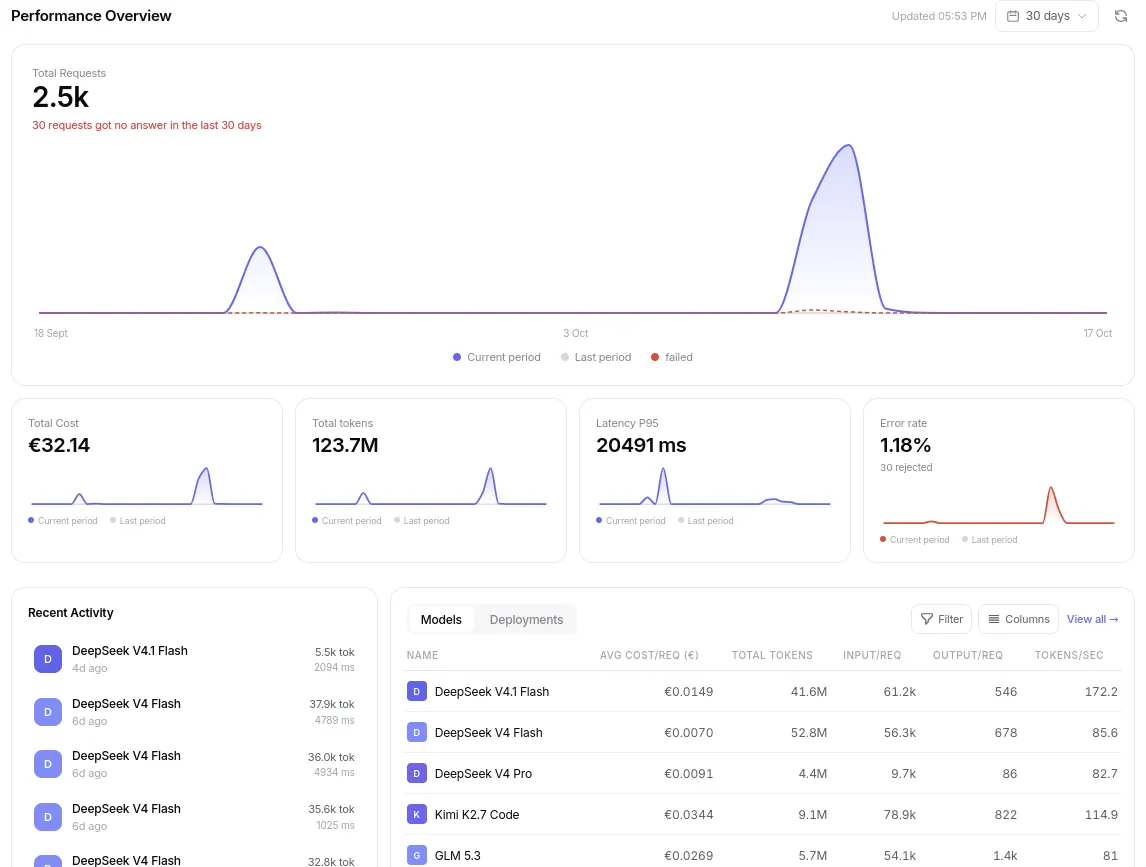
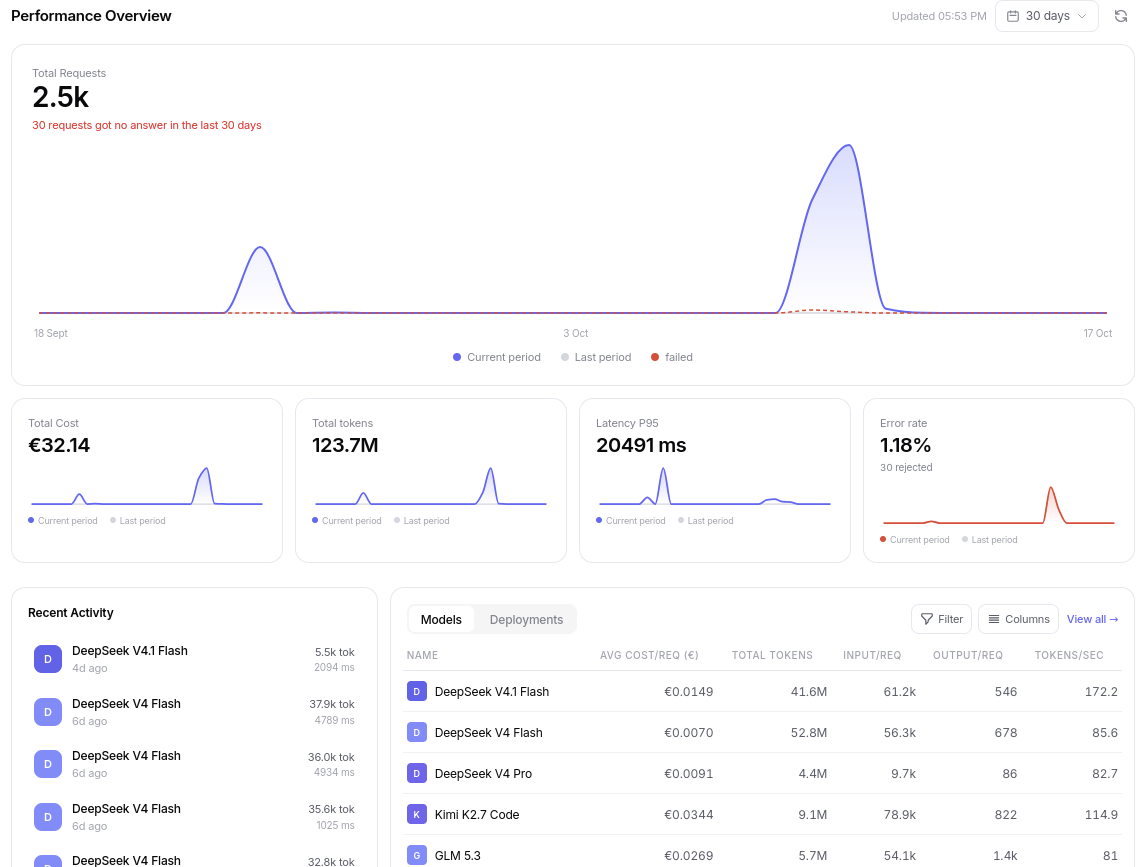
My experience with Claude code has been great. But it’s all non-free software, runs on American servers, and will no-doubt follow the enshittification playbook. There are also open-weight models. You can simply download these models and run them yourself (if you have the hardware, which you do not, lmao). I am a strong proponent of free-software and thus also prefer the tools that I use to be free-software. I have no issue in sacrificing convenience if that means more freedom. I found a Dutch platform, which offers the ability to run these open-weight models in the cloud, in Europe. This is HostYourAI, you can simply make an account and buy some credits (using iDeal even!). Then you create a token, and use whichever openai-api compatible software to run the models. I mostly played around with DeepSeek V4.1 Flash, GLM 5.3 and Qwen3. And these worked great, they are clearly worse than the latest claude models, but they are extremely capable. There are many harnesses, I tried some but found most to be very similar (Pi, OpenCode, ClaudeCode with a custom endpoint). The dashboard for HostYourAI can be seen below:
NoriNote app
I have been using my own notes app, NoriNote for the last few years. It works great and does exactly what I want it to do. One weakness however is the lack of an android app that allows me to read/edit the notes on the go without pulling my laptop out. I installed OpenCode, and gave it an access token for DeepSeek v4.1 Flash. Gave it a few instructions and a description of the notes-app I have in mind, including a small offline cache, for opening notes when the phone has no internet. And again, a few hours later, I had a working app. It worked great. Is the quality of the code amazing? Maybe not, but it is certainly better than my second-ever android app would’ve been and it was a lot faster.
A small conclusion
The price of software, and especially small tools or programs has just collapsed. It’s nearly effortless to create them, programming knowledge is barely required. The quality of the code does not matter, since you can just make it again in a few hours. Would I trust my life, or anything important with the vibe-coded applications? certainly not. Would I trust those apps to fill small gaps? absolutely. LLMs are extremely powerful, and are going to change many professions. Software development will look very different in a few years (it kind of already does!). But as I wrote in the intro, AI has also done/is doing many awful things. It certainly is not innocent, but it is a useful tool that is here to stay.
Thank you for reading this article.If you spot any mistakes or if you would like to contact me, visit the contact page for more details.
